Path through this catalogue: Low Tide / Off-season guide
Guide
An off-season order through Pandagoo, from the link to the day you wear it
Using Pandagoo alongside this Spreadsheet when the goods are for a season months away: ten stages, each matched to what Pandagoo’s own interface said in March 2026, with the off-season decisions marked.
pandagoo.com could not be reached when we checked on October 24, 2026 (Cloudflare 522), so no order can be placed through it today. The steps below describe the archived interface so that you know the shape of the process, and so that the same planning carries over to any agent you use instead.
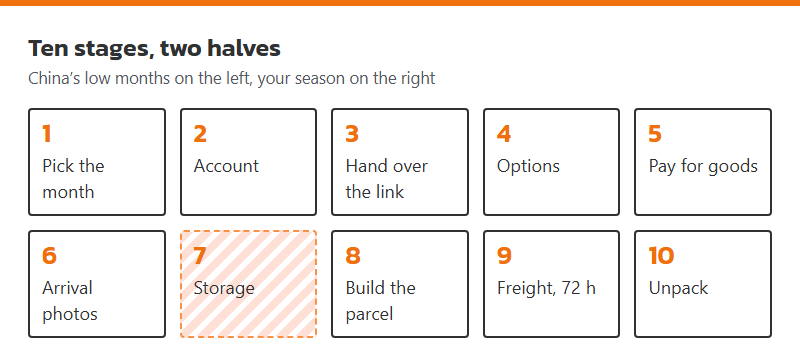
Ten stages split by one long wait
The order has two halves separated by a wait. The first half, from link to arrival photos, happens in China’s low months. The second half, from building the parcel to unpacking it, happens just before your own season. Everything between them is storage.
Stage one: choose the month before the item
Most guides start with a product. For an off-season order, start with a date. Run the Tide Table for the kit you want and note three things: the month to order, the date the parcel must be submitted, and the storage days. If the storage days come close to 300, choose a later low month or a shorter wait.
Then browse the tide shelf for that kit, or search the catalogue, and shortlist two or three listings rather than one. Clearance stock disappears, and a second choice saves a month.

Stage two: the Pandagoo account
The archived sign-in page handled registration and login together, with a Discord sign-in as an alternative. New accounts were asked to verify an email address, and the verification prompt advertised a shipping coupon package worth CNY 1,080 in total; how that package was split was not archived.
Set the account currency and add your delivery address now, while nothing is urgent. The archive warned that its automatic address reader could misread district and street lines, so check the result by hand.
Stage three: hand over the listing
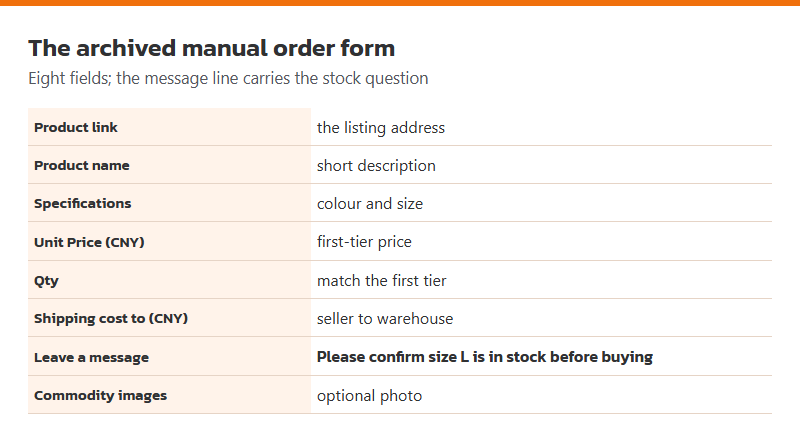
The archived search field took either a listing address or plain product words, and the page keywords mentioned Goofish, 1688, Taobao and Weidian. Paste the listing link you shortlisted; when a link could not be read, the site offered a manual order form where you typed the link, name, options, unit price in yuan, quantity, the seller’s domestic shipping fee and a message.
For off-season orders the message line is your friend. Name your size and ask whether it is really on the shelf, because clearance menus are often out of date.
Stage four: options sized for a different season
You are choosing a size for a season months away. A down coat bought in July will go over a winter sweater; a pair of sandals bought in January will meet summer feet, which swell a little in heat. Size coats over the thickest layer you own, and give sandals half a size of room if the chart sits at your exact length.
If the listing may be restricted, the archived checkout showed a commodity risk prompt, and the order only continued once you confirmed it.
Stage five: the goods checkout
The goods total, plus the seller’s domestic shipping to the warehouse, is paid at checkout. Pandagoo charged no purchasing service fee on that total; payment handling was a fixed US dollar part plus a percentage, worked into the total by the formula on the costs page.
Pay for the whole season’s goods in one checkout if you can. The fixed part is charged per payment.
Stage six: dispatch from China, then five arrival photos
The archive described orders waiting for the seller to dispatch, then for storage, before the parcel stage opened. Processing ran 09:00 to 18:00 Beijing time. On arrival the warehouse inspected each item without charge and photographed it, five photos per item by default.
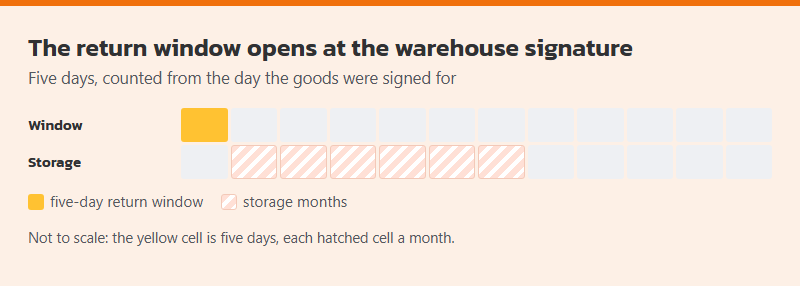
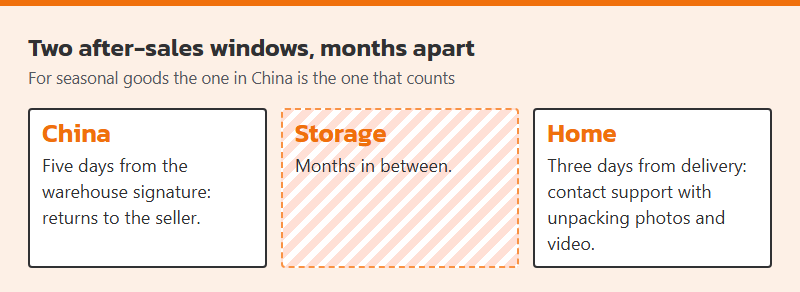
This is the moment for the careful look. Returns counted from the day the warehouse signed for the goods and were open for five days; use them. Our notes on goods that wait list where to zoom for each kit.
Stage seven: months in storage
From arrival the 300 free days ran. Nothing has to happen during the wait, but two things help: keep the order list tidy so that the season’s goods are easy to pick out later, and diarise the submit date from the planner. Add a reminder two weeks earlier, so a late item can still join the parcel.
Stage eight: building the parcel when your season approaches
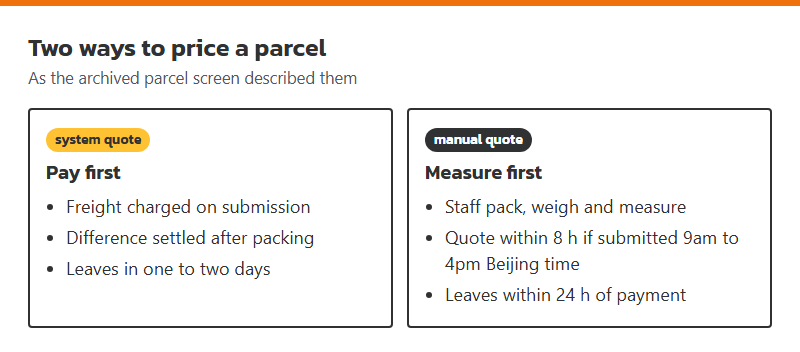
Select the stored items and submit them as one parcel. The archive offered two ways to price it. A system quote charged the freight first and settled the difference after packing, and the parcel was due out a day or two later. With a manual quote, staff packed, weighed and measured the parcel before any price appeared; submissions between 9am and 4pm Beijing time got a quote within eight hours, and the parcel was expected to leave within 24 hours of payment.
For a first winter parcel, a rehearsal package was available: the warehouse packed a trial parcel so you could see weight and size before committing. Its fee was not archived, it could not be refunded once processing began, and cancelling an already packed parcel cost a 20-yuan handling fee.
Stage nine: freight inside 72 hours
Submitting a parcel started a clock: three days, 72 hours exactly, to pay its freight before the system cancelled it. Have the balance ready before you submit. The freight total could also carry insurance and value-added service charges, each on a line of its own.
Stage ten: delivery, unpacking and after-sales
Film the unpacking. You had three days from delivery to tell support about a fault, and the archive asked you to keep the unpacking photos and video. For goods still in storage, return requests went to the seller; a Weidian seller who did not answer in five days, or a Taobao seller who did not answer in three, was taken to have agreed, and the money came back to the balance within 12 days of the seller agreeing.
For a seasonal buyer that means the real after-sales window is at arrival in China, months before you wear anything. That is why stage six matters more than stage ten.
After the first season
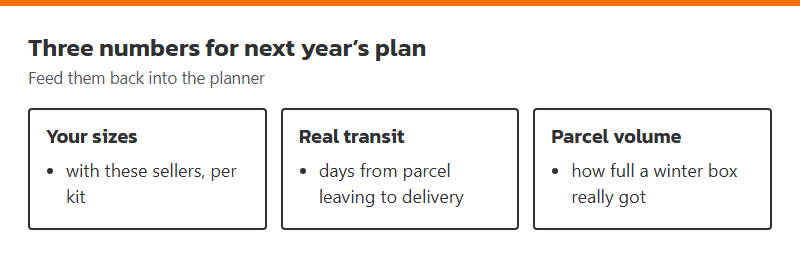
Once one off-season plan has worked, the second is easier: you know your sizes with these sellers, your line’s real transit time and how full a winter parcel gets. Put those numbers back into the planner, and look at the short answers for the questions readers send most.