
Path through this catalogue: Low Tide / Picking stock
Choosing
Picking off-season stock: size runs, fill weights and seller signals
How to choose items and sellers when you are buying months ahead, from listings we opened while building the tide shelves.
Fill words on down listings
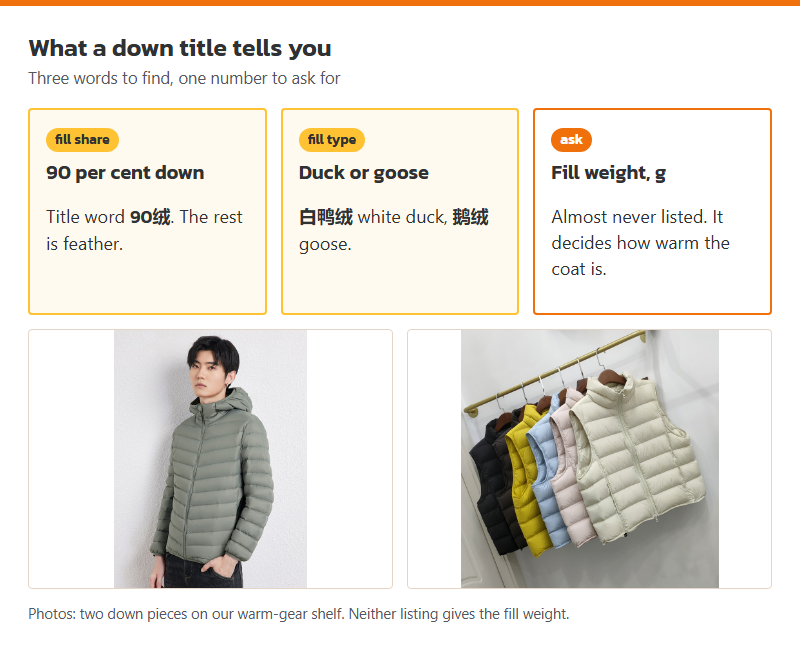
Down titles on 1688 carry their own shorthand. 90绒 means the fill is 90 per cent down and 10 per cent feather; 白鸭绒 is white duck down and 鹅绒 goose down. What almost no listing gives is the weight of the fill in grams, which is what decides how warm a coat is. A light packable coat may hold under 100 g of fill; a winter parka several times that.
When the fill weight is missing, ask. If the seller will not say, judge by the coat’s total weight in the details and by the channel width in the photos: narrow channels usually mean a thin, packable layer.
Gram figures on a listing and what they weigh
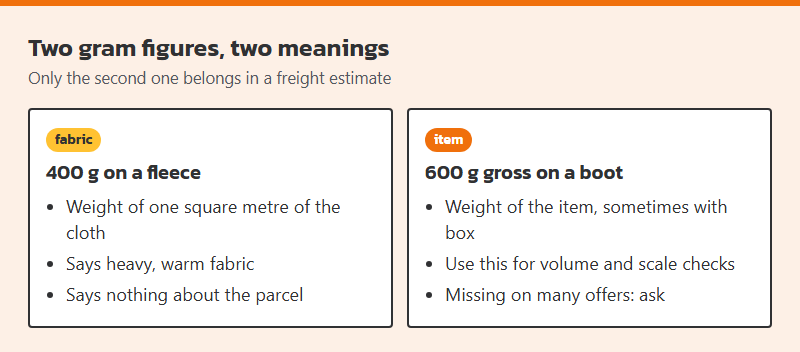
A figure such as 620 g in a fleece title, or 300 g on a hoodie, is the weight of one square metre of the cloth. It says the fabric is heavy; it does not say what the parcel will weigh. For freight you need the item’s own weight, which 1688 lists in the details on some offers and not others.
Size charts on these listings often give height and body weight in 斤 (jin, half a kilo) rather than chest measurements. A size line reading 120 to 140 means 60 to 70 kg. The English version of the page sometimes converts this already, so check which unit you are reading before you halve anything.
1688 shop clues for off-season buys
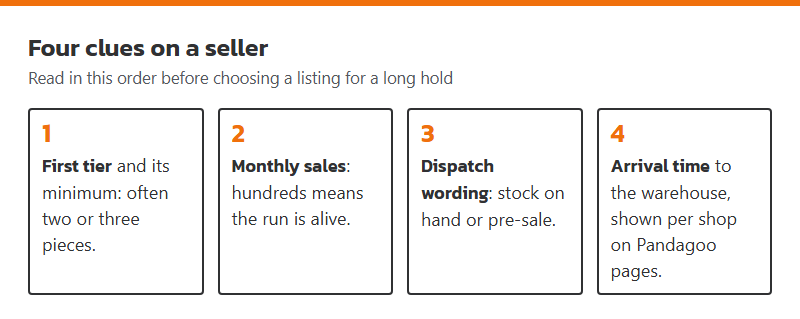
Picking the seller matters more when you buy months ahead, because there is less time to fix a wrong size and more time for a shop to disappear. These are the signs we read before choosing a seller for the shelves:
- First price tier and its quantity. Many offers show one piece in the summary but start the price ladder at two or three pieces. The first tier is what you will pay.
- Monthly sales. A figure in the hundreds tells you the run is alive. Zero in the low season is normal for some goods and a warning for others.
- Dispatch wording. Titles saying "ships from one piece" or "source factory" usually mean stock on hand. Pre-sale wording means a wait that eats into your window.
- Arrival time to the warehouse. Pandagoo’s archived product pages showed an Average Arrival Time to Warehouse line for each shop. Use the slowest figure you see as your seller allowance in the planner.
Traps that only appear out of season
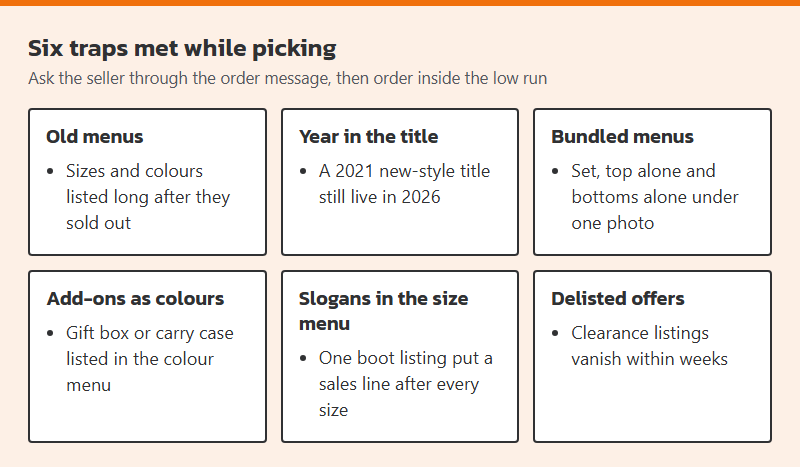
- Old menus. Colour and size menus keep last season’s choices long after the stock is gone. Ask before paying.
- Year in the title. One pair of cargo shorts we picked still calls itself a 2021 summer new style, and a pair of sandals carries 2025 inside its colour names. A year in a title says when the listing was written, not when the stock was made.
- Slogans in the size menu. One snow-boot listing attached a sales line to every size, so that size 40 read "40 truly waterproof upper" and size 43 "43 barcode labels on request". Read the size, ignore the rest, and confirm it in the message.
- Bundled menus. One glove menu mixed full-finger and flip-top styles for men and women; a thermal menu sold the set, the top alone and the bottoms alone, all under one photo. The headline price belongs to the cheapest line.
- Add-ons posing as colours. A belt menu offered every colour again with a gift box, and a sunglasses menu listed the carry case as if it were a colour.
- Delisted offers. A clearance listing can vanish within weeks. If it matters, order inside the low run rather than waiting for its last week.
What to leave alone
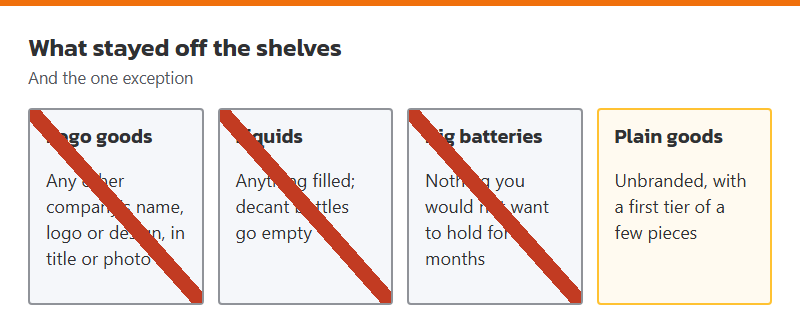
We kept the shelves to unbranded goods and dropped every candidate that showed another company’s logo, name or recognisable design, including ones hidden in the photos rather than the title. Pandagoo’s archived checkout showed a commodity risk prompt on goods that might be restricted, and the order only continued once the buyer confirmed it; we simply did not pick anything that would raise it.
We also left out goods that age badly on a shelf: anything with a liquid inside other than empty decant bottles, and gadgets with large batteries that you would not want to hold for months. Hand warmers and small fans made the slack-water shelf with a note, because the archived freight form listed built-in batteries as their own goods type.
Read next: checks for goods that wait, the tide shelves.